What is Art Therapy?
A different way to approach therapy- through art, conversation, and the creative process.
Art therapy is a form of psychotherapy that uses art making and the creative process alongside psychological theory to support mental, emotional, and relational well-being.
In art therapy, the art isn’t the treatment by itself. The process of creating, along with the therapeutic relationship are.
You don’t need to be an artist. You don’t need to know how to draw. And you especially don’t have to know what we are supposed to make.
Art simply gives us another way to explore what is happening inside us.
Sometimes words aren’t enough.
We spend a lot if time in our heads.
We think about what happened.
We relay conversations.
We try to understand why we feel the way we do.
We search for the right words.
But sometimes you can understand something intellectually and still feel stuck.
Art can give us another way in.
When we create, we are not only thinking- we are also using our senses, our bodies, our attention, our emotions and our imagination. Something that has been difficult to explain can sometimes become easier to see, feel or experience.
That’s one thing I love most about art therapy. It gets us out of our heads.
What does art therapy actually look like?
There is no single wat to do art therapy.
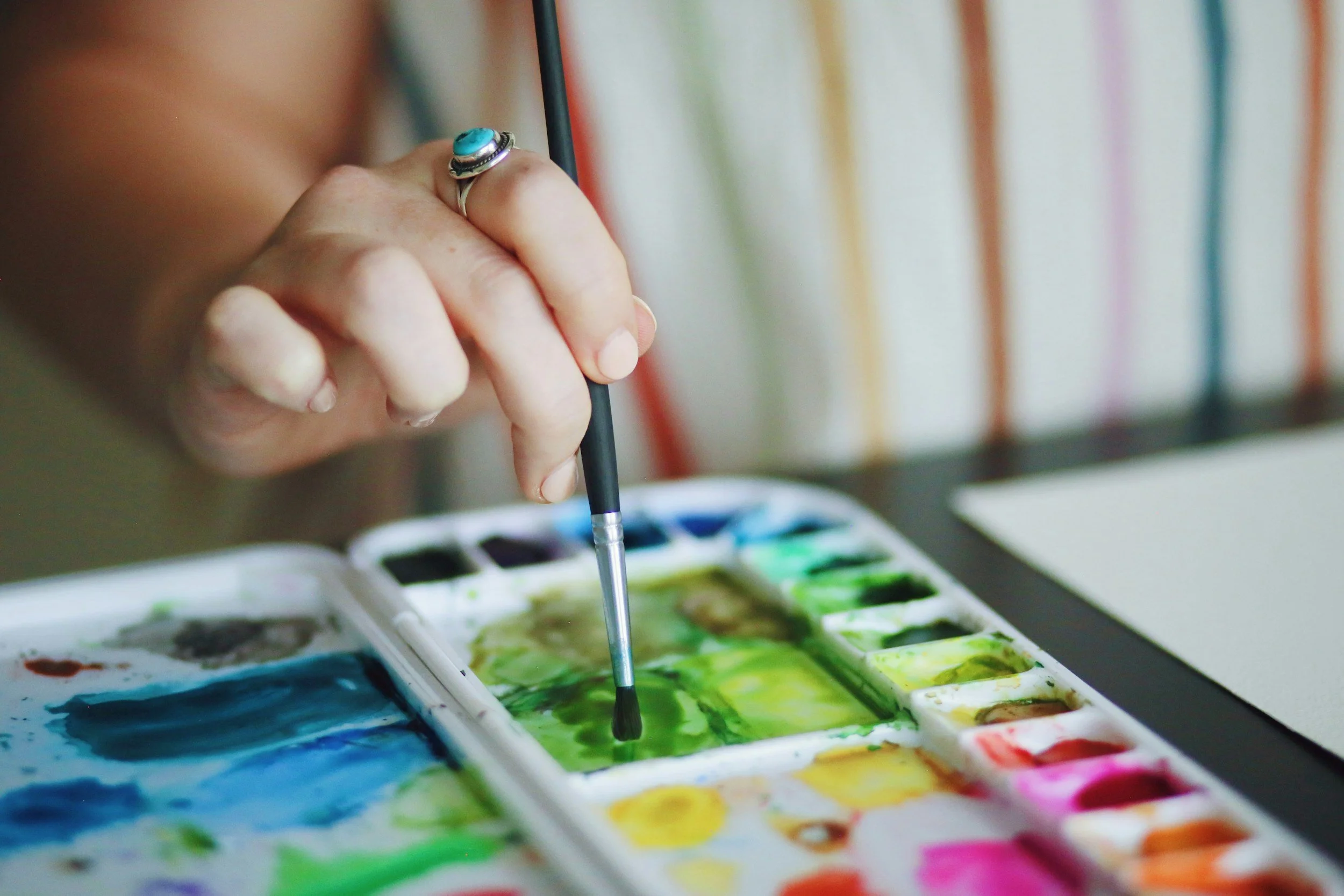
A session might include creating with paint, drawing, collage, clay, writing, or other materials. It might involve looking at or responding to an image. It might be mostly conversation with a small creative activity woven in.
Sometimes we’ll start with something you're experiencing and will use art to explore it.
Other times, we might simply start creating and see what develops.
We’ll talk about what you notice, what the process was like, what you’re experiencing and if anything feels meaningful or worth exploring further.
The artwork doesn’t have to tell us anything. It also doesn’t have to become anything.
The process itself can be valuable.
Do I have to be good at art?
No. Not even a little.
Art therapy is not an art class (although you might learn a new skill or two). I’m also not evaluating your artistic ability.
Stick figures, scribbles, collage, paint, words, color or whatever else feels accessible can be part of the process.
You don’t have to make something beautiful.
You don’t even have to like what you make.
In fact, sometimes taking away the pressure to make something “good” creates room for something much more interesting to happen.
Will you interpret my artwork?
You may have heard the idea that a therapist can look at a drawing and immediately tell you what it means. That is not how I approach your artwork.
There isn’t a universal dictionary where a certain color, shape, or image automatically means a particular thing. Instead, we will be curious about your experience.
What did you notice when making it?
What were you feeling?
Did anything surprise you?
Does it remind you of something?
Did the process feel calming, frustrating, freeing, uncomfortable or something else?
You artwork is an opportunity for exploration. Not a test with the right answer.
How is art therapy different from doing art on my own?
Making art can absolutely be calming, expressive and meaningful on its own. You don’t need a therapist to benefit from being creative.
Art therapy is different because it takes place within a therapeutic relationship with a trained mental health professional.
The artmaking is intentionally integrated into the therapeutic process and can be used to support goals related to emotional well-being, self-awareness, relationships, coping, communication, and personal growth. Art therapists receive graduate level training in both art and psychotherapy, along with supervised clinical training.
An art class might ask: “What are you going to create?"
Art therapy might ask: “What is this experience like for you?”
What can art therapy help me with?
Art therapy can be used with people of many ages and in different circumstances. It may support people who are experiencing:
Anxiety and stress
Depression or low mood
Grief and loss
Life transitions
Relationship challenges
Self-esteem or identity concerns
Emotion regulation
Trauma and difficult experiences
School or work-related stress
Feeling overwhelmed, stuck or disconnected
A desire for greater self-understanding and personal growth
Art therapy isn’t only for people who have a diagnosis or specific problem they can put into words.
Sometimes you simply know, something isn’t feeling right.
That can be enough of a place to begin.
What if I don’t want to make art?
That’s completely okay.
Being in art therapy doesn’t mean you will spend every session making art.
Some sessions may involve creating. Some may involve talking. Often, we will move between the two depending on what feels useful that day.
You always have a voice in the process.
There is no pressure to make something just because you are in an art therapy session.
Art therapy is more than just making art.
One of the reasons I believe so strongly in art therapy is that the creative process gives us permission to experiment. You can add a layer. Change your mind. Cover something up. Start again. Make a mess. Leave something unfinished. Sometimes the result becomes something beautiful. Sometimes it doesn’t. However, it’s important to remember that both can be meaningful. Therapy is like that too. You don’t need to arrive knowing exactly what needs to change or where you are going. We can start with where you are, get curious about what’s happening, and see what unfolds.
You don’t have to have all the right words. You just have to start somewhere.
A note about the profession
Art therapy is a professional mental health field requiring graduate level education and clinical training. Art therapists are trained in both art and psychotherapy and may practice in settings including private practice, schools, hospitals, community programs and other healthcare settings. Professional credentials and licensure requirements vary by state.